Publications

The Returnable Satellite — Why Reusable Spacecraft Belong in Space Resilience Policy

Reusable rockets have drastically slashed the cost to reach orbit, but despite this capability nearly every U.S. satellite is still built to be used once and then abandoned. The U.S. should now focus on developing recoverable and reusable satellites to enhance American space resilience doctrine, reduce orbital debris, and increase defense-supply chain security. Particularly as our adversaries, like China, are already moving in that direction. Six recommendations for Congress and the Department of War (DoW) are outlined below, several of which align with the White House's new National Space Transportation Policy (NSPM-17, signed August 20, 2026).
Getting ready for lunar planetary defense

July 13, 2026 Peter Garretson Space News

As we become an interplanetary species, it is important to protect this multi-year, multi-billion-dollar investment while building a habitable environment. That starts with bolstering the Space Force’s ability to detect and counter asteroid threats to American lunar infrastructure.

The New Nuclear Age

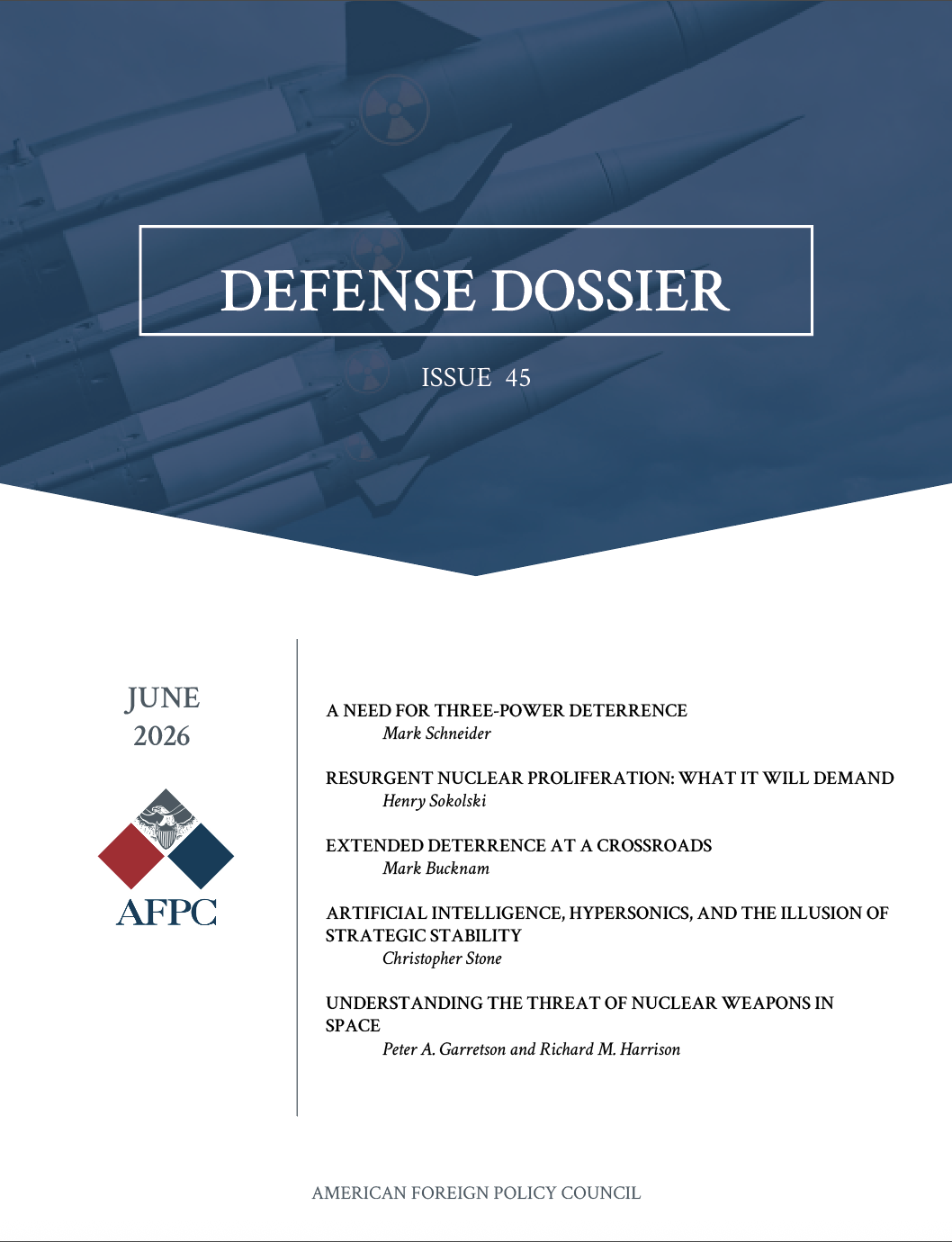
July 9, 2026 Peter Garretson,  Richard M. Harrison Issue 45

A Need for Three-Power Deterrence

Resurgent Nuclear Proliferation: What It Will Demand

Extended Deterrence at a Crossroads

Artificial Intelligence, Hypersonics, and the Illusion of Strategic Stability

Understanding the Threat of Nuclear Weapons in Space

The new theater of great power competition is space

June 25, 2026 Lamont Colucci Geopolitical Intelligence Services

Space is now a key stage in the competition among great powers. No longer peripheral, it is becoming integral to how states pursue dominance and shape the international system. Grand strategy is the long-term (multi-generational) effort by states to secure advantage and shape the international system. When great powers compete, they do so through rival grand strategies, extending their pursuit of security and influence across domains.