Will the Iran War Trip up TRIPP?
The Iran War has temporarily disrupted Caucasus-Central Asia connectivity. The United States must reassure the region that it still wishes to engage with its development.
The Iran War has temporarily disrupted Caucasus-Central Asia connectivity. The United States must reassure the region that it still wishes to engage with its development.
This article examines how Uzbekistan can strengthen its economic security by leveraging its extraordinary cultural heritage and strategic positioning to transition from a volume-driven tourism model towards more of a value-driven approach.
Russia’s war in Ukraine has produced a paradox for US strategy: it has significantly reduced Russia’s strategic long-term power while hardening Moscow into a more dangerous, risk-tolerant adversary for the United States and its allies and partners in Europe, the South Caucasus, and Central Asia.
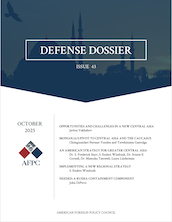
Opportunities and Challenges in A New Central Asia
Mongolia’s Pivot to Central Asia and the Caucasus
An American Strategy for Greater Central Asia
Implementing A New Regional Strategy
Needed: A Russia Containment Component
The inconsistency of US foreign policy in the Wider Middle East and Greater Central Asia is stark. Over the last three decades, American priorities have cycled erratically between supporting state sovereignty, promoting democracy and state-building, and disengagement, before reverting to re-engagement. Such unpredictable shifts only confuse allies and embolden adversaries.